
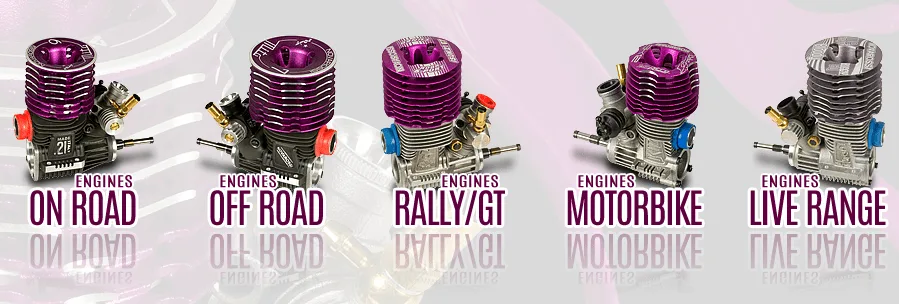
Nitro RC Engines: Maintenance and Tips
In this post I will share a series of tips and facts you should keep in mind for proper use of your nitro engines, including maintenance, operation, cleaning, and more.
If you think this post can help others, feel free to share it.
-
What type of fuel you need:
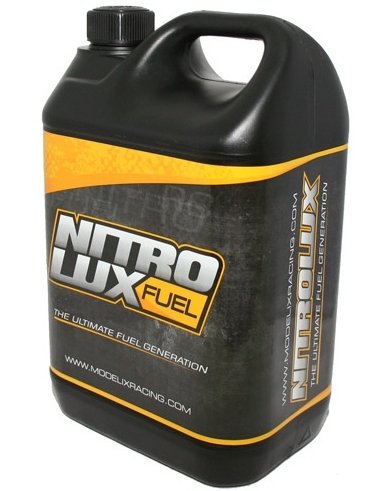
Always use fuel specifically designed for these engines.
Fuel composition depends on engine type: 1/8 ON ROAD / RALLY-GT: 25% nitro + 6% castor oil + 4% synthetic oil + 65% pure methanol 1/10 TOURING: 16% nitro + 6% castor oil + 4% synthetic oil + 74% pure methanol 1/8 OFF ROAD: 25% nitro / 3% castor oil / 7% synthetic oil / 65% pure methanol 33% nitro / 3% castor oil / 7% synthetic oil / 57% pure methanol
Always shake the can before use to ensure the mix is evenly distributed. Do not leave the can open for long—methanol absorbs ambient moisture quickly, which can degrade fuel quality and increase corrosion inside the engine. Fuel older than six months is not recommended either.
-
Optimal operating temperature:
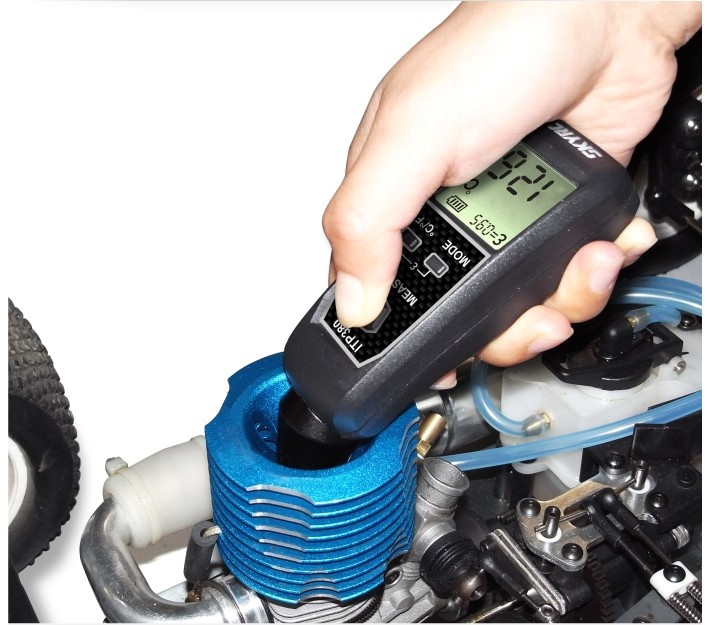
The correct temperature for a nitro RC engine varies with ambient temperature, fuel, altitude, airflow, body, driving style—countless factors influence it directly. Nobody can tell you the exact temperature your engine should run at. Often, until you learn the habit, you will read temperature wrong because you should always measure at the same point and distance. Generally, temperature should be taken just above the glow plug, about 2 to 3 cm away.
Engines usually work in a range from about 95°C to 140°C. They are designed to operate within that range.
Here is a tutorial on how to tune a nitro RC engine: how to tune a nitro RC engine—very useful if you are just starting out!
-
The air filter:
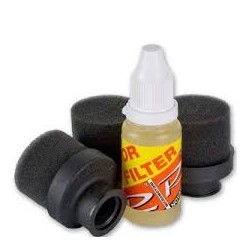
The air filter is often one of the most neglected parts. A filter sitting there without maintenance does nothing. It is vital for your engine!
Never run or test without an air filter—any debris can get in and destroy the engine internally. Always use air filter oil; running without filter oil lets fine particles through and will damage your sleeve/piston.
Apply oil directly to the foam and work it in with your fingers. Once you are sure the foam is fully soaked, use a clean cloth or paper towel to remove excess oil from the filter.
When installing the filter, make sure the base and inside are clean, and secure the filter boot to the carb with a zip tie so it stays sealed and does not come off while driving.
-
After Run oil:

To apply it, remove the air filter and add about 5 drops with the carb open so it reaches the crankshaft, then rotate the engine so it spreads inside the crankcase. You can turn it by hand, with a starter box, or with the pull start. That distributes oil throughout the interior.
Some people remove the glow plug and add oil that way, but it is not recommended—you could drag debris inside. Do not use lubricants like WD-40, as they contain silicones that can also harm the engine.
-
How to remove the clutch bell:
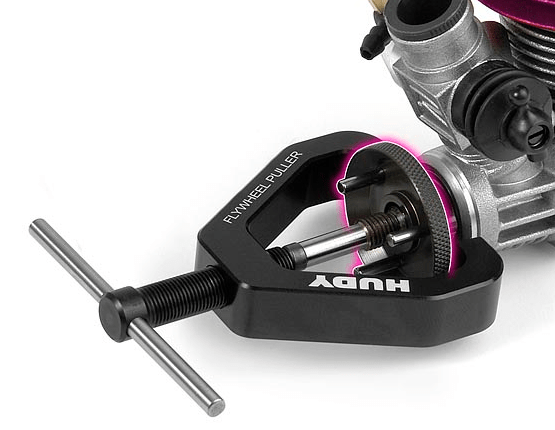
We know investing in specific tools can feel painful, but the first time you use a proper clutch bell puller, you realize how worth it it is—after years of screwdrivers, hammer taps, and so on...
It would not be the first broken crankshaft from removing the bell the wrong way!
-
When to change the connecting rod:
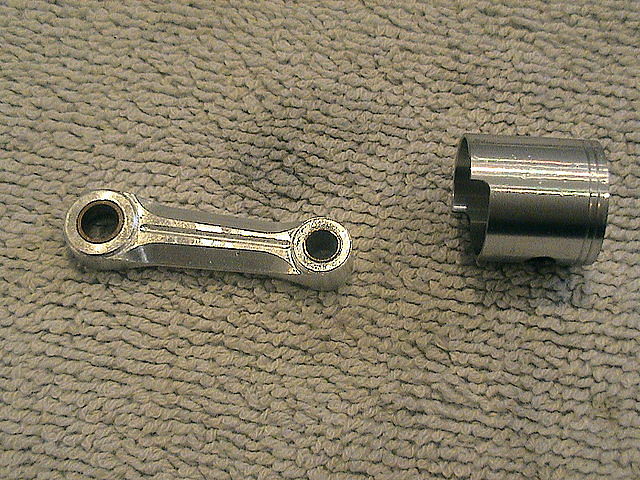 The connecting rod change is very common in competition because it is one of the parts under the most stress, and honestly it is where many engines fail. There is a habit of changing the rod after engine break-in, but Novarossi specifies when to change it:
On-road engines: 10 liters.
Off-road engines: 30 liters.
The connecting rod change is very common in competition because it is one of the parts under the most stress, and honestly it is where many engines fail. There is a habit of changing the rod after engine break-in, but Novarossi specifies when to change it:
On-road engines: 10 liters.
Off-road engines: 30 liters.
Big difference, right? That is normal—on-road engines tend to seize at high rpm, and on-road engines rev much higher than off-road. At high rpm engines also lubricate less and centrifugal force is greater. It is also recommended to change the clip that retains the wrist pin.
-
Carburetor cleaning:
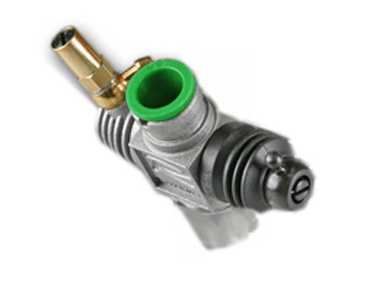 Cleaning the carburetor is done far too rarely, especially when the engine is tuned and running well. Ideally you would disassemble and clean it if tuning is unstable, behaves oddly, or something got inside. Clean with fuel that still has oil in the mix—not pure methanol, which can damage O-rings.
Be careful when reinstalling the barrel—it has a correct orientation! The slot is designed to align with the idle needle.
-
The throttle return spring:
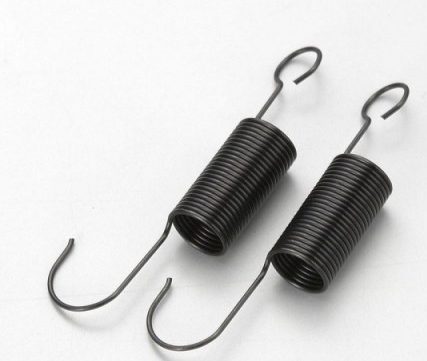
This spring—or the famous "rubber band" trick—can save your car and your engine. Set it up so that if the car loses radio signal, the throttle/brake servo fails, or a linkage comes loose, the carb barrel tends to close and leave the engine at idle. Without this, Murphy's Law usually leaves the throttle wide open—and the consequences are not pleasant.
-
The venturi:
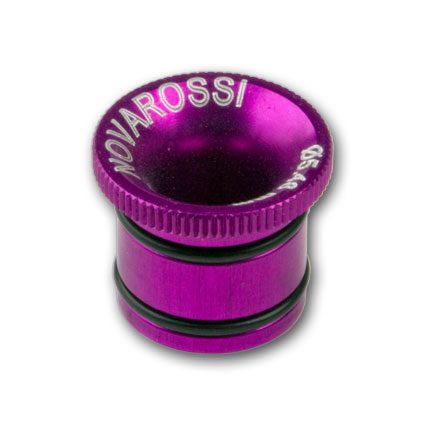 The venturi is also often overlooked. Here we are not talking maintenance but performance. How does it work?
Larger venturi diameter: Increases top speed and fuel consumption.
Smaller venturi diameter: Reduces top speed and fuel consumption.
The venturi is also often overlooked. Here we are not talking maintenance but performance. How does it work?
Larger venturi diameter: Increases top speed and fuel consumption.
Smaller venturi diameter: Reduces top speed and fuel consumption.
This adjustment depends on the track or pit strategy; sometimes differences are almost imperceptible, but with a stopwatch you will see it matters.
-
The exhaust manifold:
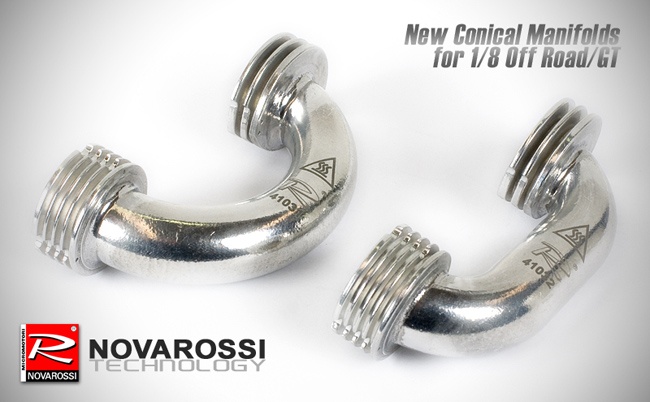 Exhaust manifolds also play an important role in engine setup, as shape and length change performance:
Short manifold: Less low-rpm acceleration but higher top speed.
Long manifold: More low-rpm acceleration but lower top speed.
Conical manifold: Higher speed, more acceleration but higher consumption.
Standard manifold: Lower top speed, lower acceleration and lower consumption.
Exhaust manifolds also play an important role in engine setup, as shape and length change performance:
Short manifold: Less low-rpm acceleration but higher top speed.
Long manifold: More low-rpm acceleration but lower top speed.
Conical manifold: Higher speed, more acceleration but higher consumption.
Standard manifold: Lower top speed, lower acceleration and lower consumption.
-
The exhaust pipe:
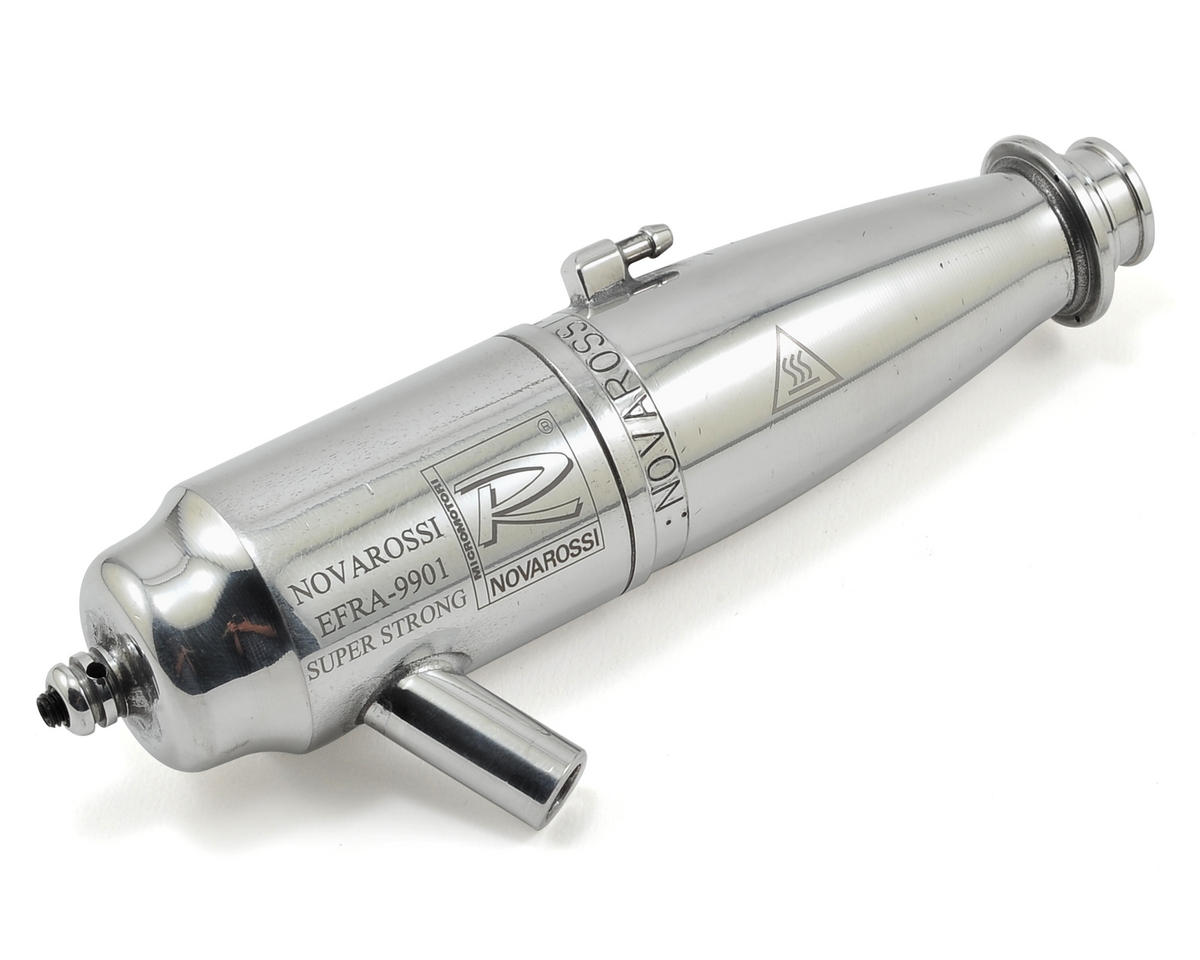 The exhaust pipe has two jobs: quiet the engine and optimize performance. Noise depends on design, chamber count, and outlet diameter; performance depends on diameter, length, and internal design.
Performance: A shorter exhaust pipe: Less torque but higher top speed. A longer exhaust pipe: More torque but lower top speed.
-
How to stop an engine:
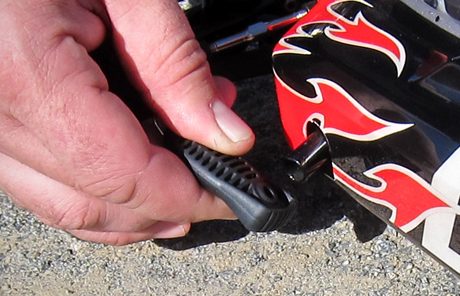 To stop a running engine, the easiest way is to cover the air filter. When the filter is not accessible, you can stop it by blocking the exhaust outlet (with something that is not your finger). Some brands sell special tools to shut it down without burning yourself. Another option is to pinch the fuel line to the engine. Notice how many options I give before trying to stop it with your finger on the flywheel—not the first time I have seen that.